How to make Douglas fir tea
Chop the needles, use water just off the boil, and give it longer than you would give black tea.
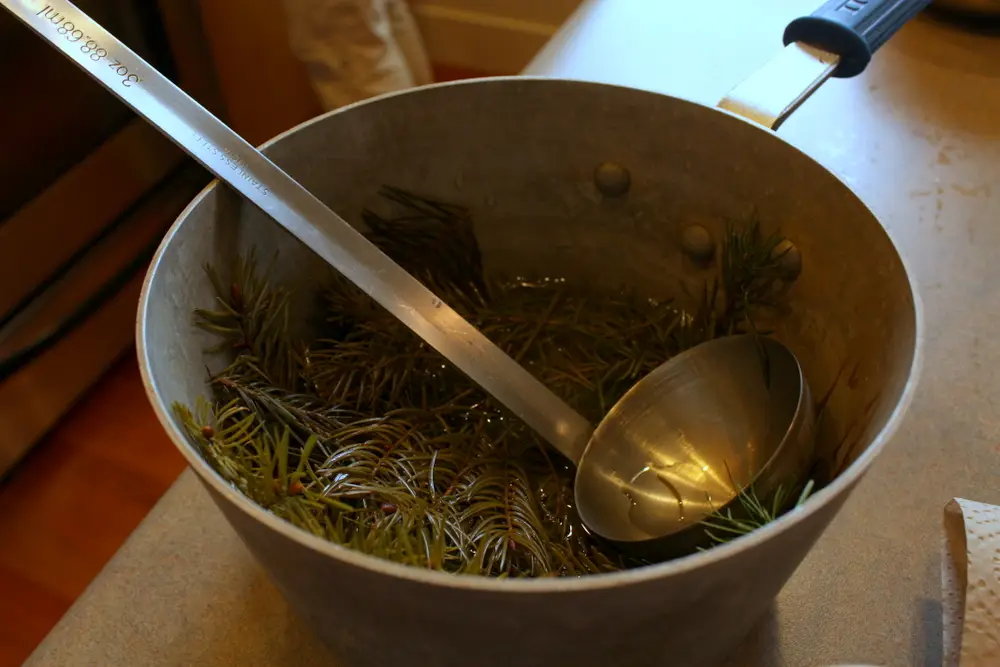

Douglas fir tea is forgiving. There’s no caffeine to overdo and no exact temperature to hit. When a cup disappoints, it’s usually because there were too few needles in it or too much woody stem.
The basic method
For one cup you need a tablespoon of fresh needles or a teaspoon of dried ones. Foragers and herbalists disagree a little on the exact amounts (the Washington Park Arboretum’s writeup quotes both of those figures from different people), so treat them as a starting point and adjust.
- Pull or snip the needles off the twig and throw the stem out. The brownish stems are bitter and taste of resin.
- Chop the needles roughly so the hot water can get into them.
- Boil the water, then let it sit for a minute off the heat.
- Pour it over the needles and cover the cup. The lid matters more than you’d think, since the citrus smell is carried by oils that leave with the steam.
- Wait 8 minutes. Strain and drink.
Expect a pale yellow cup. That’s normal for this tea and says nothing about strength. If it tastes thin, use more needles next time before you try steeping longer.
Fresh needles, dried tips or a bag
Fresh mature needles are on the tree all year, which makes them the practical choice in December. They work fine as long as you keep the stems out.
Fresh spring tips are the soft, lime green new growth that appears for a few weeks in spring. Foragers prize them for a lemony tang that the older needles have less of. Our guide to spring tips covers when and how to pick them.
Dried tips are what you get in a bought loose tea. Rowen Forest, which sells them, suggests a teaspoon in 8 ounces of hot water for 5 to 8 minutes.
Tea bags are the lazy option and there is nothing wrong with that. Give the bag longer than you think. The Strategist’s reviewer left hers for 5 to 10 minutes.
Cold brew
Put a teaspoon of dried tips (or a small handful of fresh ones) in a jar with a cup of cold water and leave it in the fridge for 4 to 6 hours, or overnight. Those are Rowen Forest’s timings. The Strategist’s reviewer found the hot tea very dry on the finish and suggested drinking it iced, so if the hot version isn’t for you, try this before you give up on it.
What to add
Honey is the obvious one. Kathy Stevens, a Seattle area herbalist quoted by the arboretum, also suggests cinnamon, small strips of dried orange peel or a squeeze of lemon. The orange peel and cinnamon version is the one to make in December.
Common mistakes
- Boiling the needles hard. Older traditions did boil whole twigs, but the modern recipes we found all steep, and one specifies hot water that is not boiling.
- Using needles from a tree you can’t vouch for. Roadside trees collect exhaust and yard trees may have been sprayed.
- Using a bought Christmas tree. Commercial trees are a crop and may be treated with things you don’t want in a cup.
- Guessing at the tree. If you aren’t sure it’s a Douglas fir, read how to identify one first.
- Douglas Fir Tea: Ethnobotany and Health Benefits . Arboretum Foundation, Washington Park Arboretum Bulletin, spring 2026.
- Douglas Fir Spring Tip Tea product page . Rowen Forest.
- How to Make Douglas Fir Tea . NatureOutside.
- Juniper Ridge Douglas Fir Spring Tip Tea review . The Strategist, New York Magazine.